Search results
213 articles found
matching your search request
accountability
-
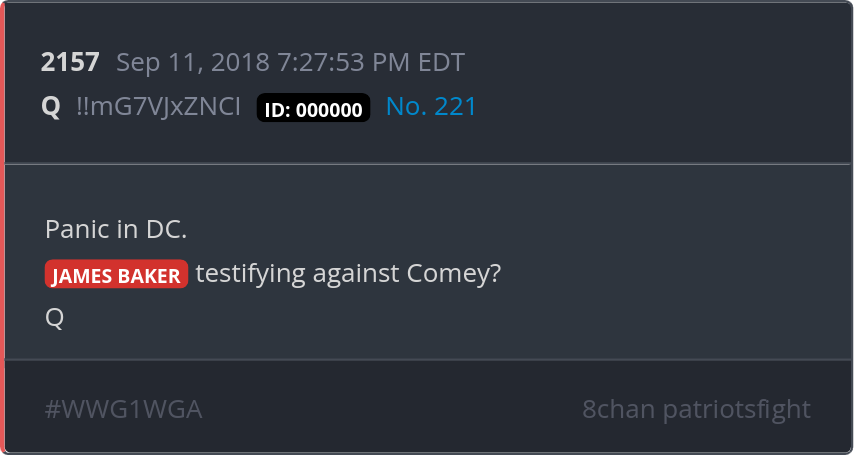
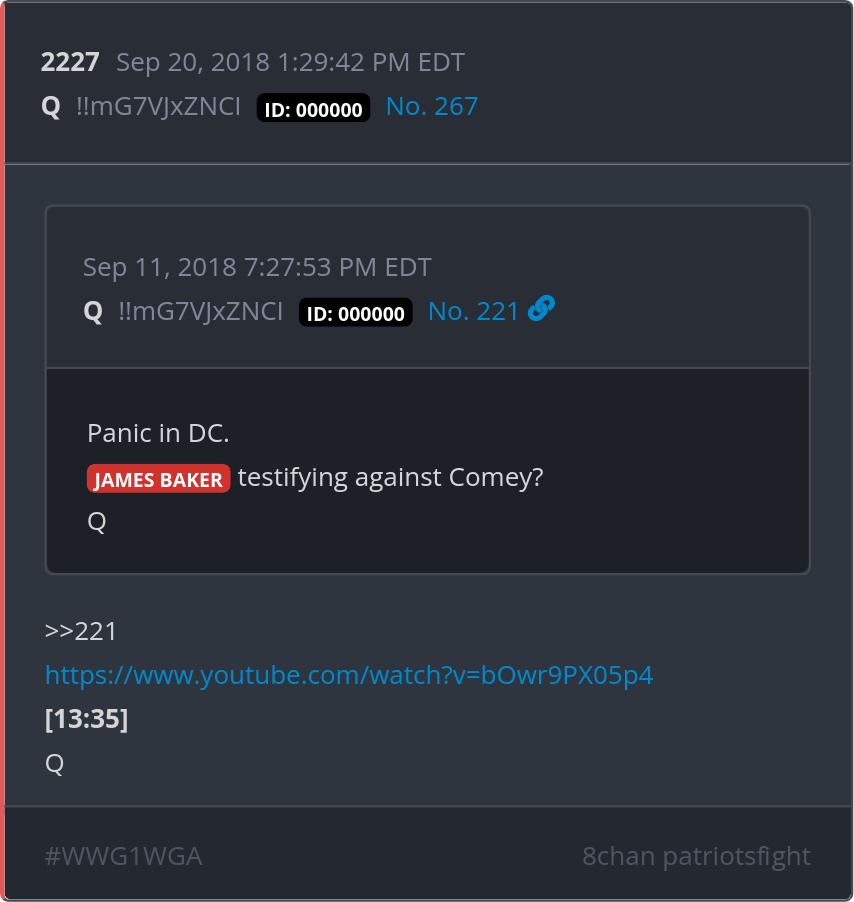
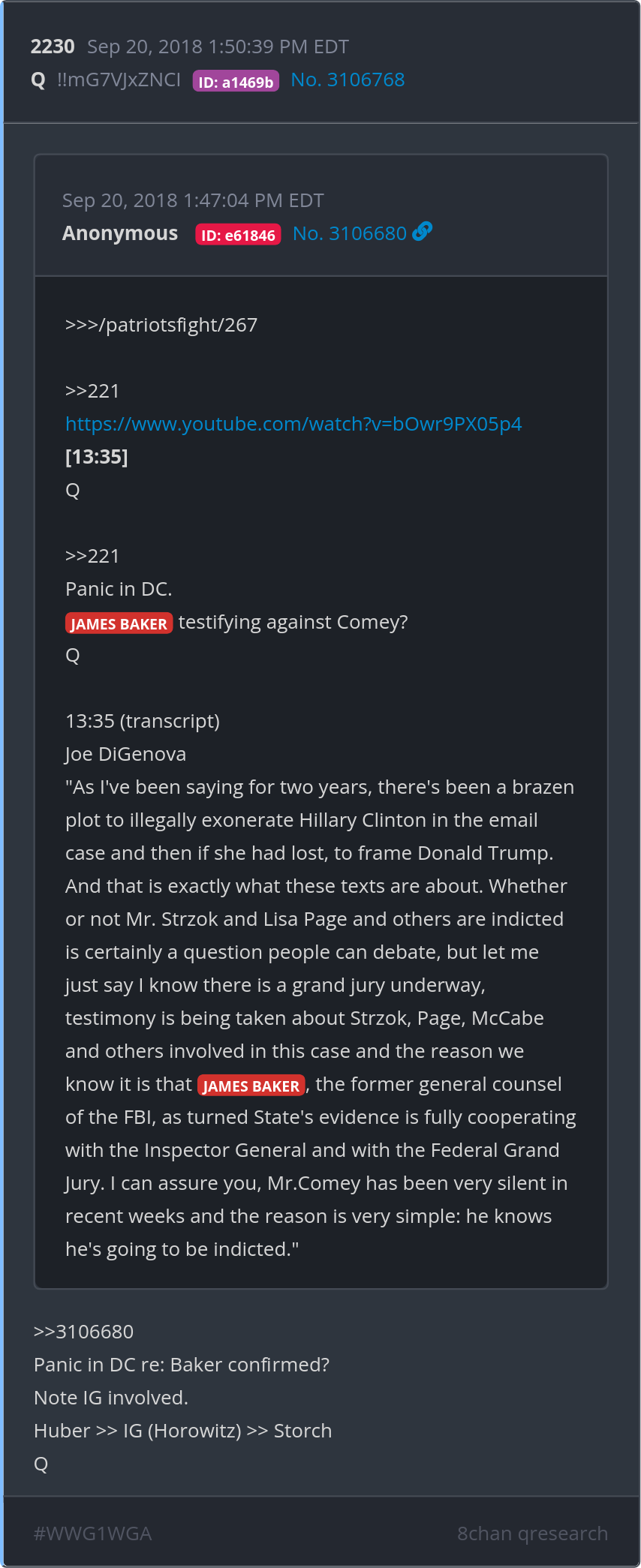
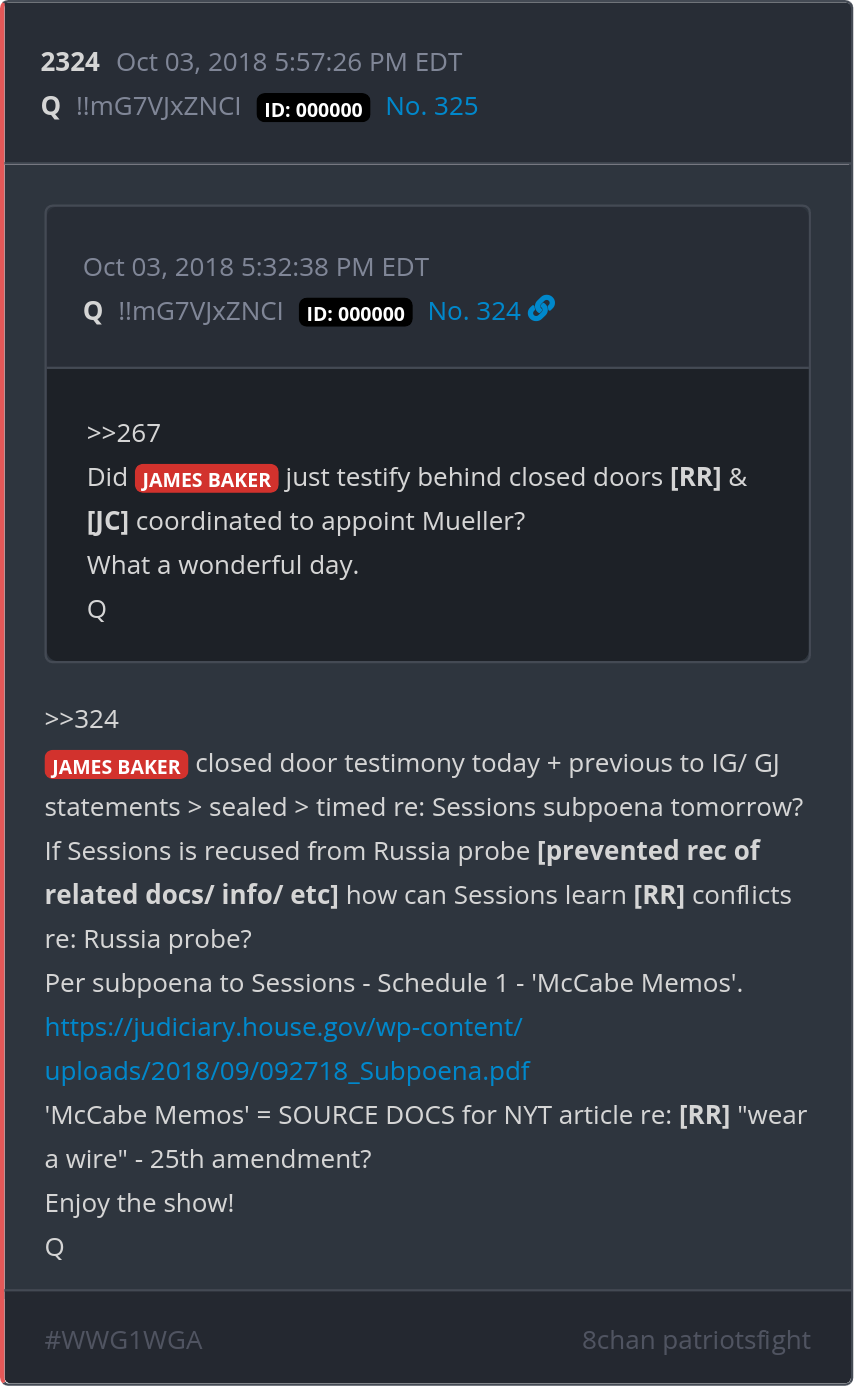
James Baker told investigators he believed his authorization to disclose classified information to The New York Times came directly from FBI Director James Comey, passed through Chief of Staff James Rybicki. Comey. Rybicki. Baker. The New York Times.
February 25, 2020. Buried inside an FBI closing memorandum was a revelation that should have set Washington’s corrupt little swamp on fucking fire.
James Baker told investigators he believed his authorization to disclose classified information to The New York Times came directly from FBI Director James Comey, passed through Chief of Staff James Rybicki.
Comey. Rybicki. Baker. The New York Times.
The FBI documented the alleged authorization chain all the way to the director’s office.
And those spineless bastards declined prosecution.
Six years later, Comey faces two federal charges over that same disclosure. What the fuck changed? How did evidence sufficient to warrant criminal charges in 2026 end up gathering dust in 2020? Who decided America’s holier-than-thou FBI director deserved a free pass?
And just when you think this steaming mountain of Washington horseshit couldn’t possibly stink any worse, along comes Jack Smith.
Internal emails from Smith’s supposedly immaculate operation documented repeated screwups involving potentially privileged material reaching investigators who had no business receiving it.
On August 3, 2023, his office instructed the FBI to hunt down document SM_MAL-0021793 across its computer systems and purge improperly distributed copies.
Another email discussed deleting correspondence before someone remembered those pesky federal records obligations.
Holy fucking hell.
These sanctimonious assholes were entrusted with protecting attorney-client privilege while investigating a former president, and their own records describe repeated failures, frantic cleanup efforts, and concerns about preserving the evidence of their screwups.
Then Smith marched before Congress and assured senators his office followed Justice Department policies and legal requirements.
Are you fucking kidding me?
Who saw the privileged material? What did they learn? Were the records properly preserved? And why the hell should anyone swallow Smith’s self-serving assurances without examining every last email?
For years, these pompous, self-righteous pricks demanded absolute reverence for their investigative authority while lecturing Americans about accountability.
Now their own documents are dragging their carefully polished reputations through the mud.
Every relevant record should come out. Every contradiction deserves an answer. Every official responsible for proven misconduct should face the consequences.
Because Washington’s arrogant little guardians of justice have spent years telling Americans that nobody stands above the law.
Let’s see how much those sanctimonious bastards love that fucking principle when they’re the ones under the microscope. (article below)— Flopping Aces (@FloppingAces) October 28, 2026
Posted ·
Categories Clips -
The claim that “famous climate deniers and union busters the Koch Brothers” are trying to buy the race for Christine Drazan does not match the donor data.
Oh no. Busted again
Your people crack me up:
Someone checked the actual public filings and the results.The claim that “famous climate deniers and union busters the Koch Brothers” are trying to buy the race for Christine Drazan does not match the donor data. Drazan’s major reported support in the 2026 cycle has come primarily from Oregon-based individuals and businesses (construction, timber, auto dealers, plywood, and related PACs such as Associated General Contractors), with a large share of in-state money and a recent $1 million from the Republican Governors Association. No large, itemized Koch Industries or Koch-family contributions appear as top donors in the available ORESTAR-based reporting for this cycle. In 2022 the top sources were the RGA and Oregon/business interests (plus Phil Knight), not the Kochs.
By contrast, Tina Kotek’s fundraising is dominated by national Democratic groups (Democratic Governors Association and related funds in the millions) and organized labor PACs. These include SEIU 503’s Citizen Action for Political Education ($1 million), the Oregon Nurses PAC ($820,000), carpenters-linked committees (hundreds of thousands, with related PACs receiving very large infusions), AFSCME, teachers’ unions, and electricians’ locals. Unions and their committees account for a large share of her cash, consistent with prior cycles.
Climate and energy agenda
Oregon’s aggressive clean-electricity mandates (including the 2021 law aiming for major emissions reductions and a 2040 clean-electricity goal) have not produced a reliable, affordable supply that matches demand growth. Transmission constraints controlled largely by the Bonneville Power Administration have blocked nearly all of the hundreds of large renewable projects that applied to connect since 2015 (only a handful approved). Utilities such as PGE and PacifiCorp remain well behind the timelines needed to hit intermediate targets. Residential electricity rates for major utilities have risen more than 50% over recent multi-year periods—far above inflation—while reliability concerns persist during peak demand and extreme weather. Kotek has issued executive orders to accelerate permitting and align agencies with the Energy Strategy, yet the structural bottlenecks, higher costs, and risk of shortages or continued reliance on imports remain. Oregon’s contribution to global emissions is tiny; the practical result for residents has been higher bills and constrained new generation rather than a sustainable, resilient supply.Unions and schools
The donor attack on Drazan does not hold up against the public records. Kotek’s coalition is the one heavily powered by public-sector and building-trades unions plus national Democratic committees. Those same unions exercise substantial influence over education policy and funding in a state where results have not improved in proportion to the money. On energy, the state’s climate-driven mandates have produced higher rates and persistent delivery constraints rather than a demonstrably sustainable, reliable system capable of meeting growing demand without cost and reliability trade-offs.— MessageFromTheMindField (@MsgFrmThMndFld) October 11, 2026
Oregon’s teacher unions rank among the nation’s strongest in political influence and resources. The 2019 Student Success Act delivered a large ongoing funding increase (corporate activities tax generating roughly $1.5 billion annually for education). Per-pupil spending is above the national average and teacher compensation is competitive. Despite this, academic outcomes lag: fourth-grade reading ranks near or at the bottom nationally in adjusted analyses, state proficiency rates remain low (roughly 40% range for English language arts and low 30s for math in recent assessments), and graduation gains have not been matched by proficiency. Unions have successfully shaped funding formulas, opposed certain accountability and curriculum reforms used successfully elsewhere, and secured provisions such as unemployment benefits for striking public employees. Local control and collective bargaining leave outcomes highly variable while overall results stay weak relative to spending.Posted ·
Categories Clips -
Hokey Smokes!
This is long but a necessary read for all Oregon voters, especially those who aren’t necessarily well versed or knowledgeable of Tina Kotek’s way of governing. She was and is a terrible, vindictive person but more so to her own party members. I was a witness to all former Rep. Diego Hernandez writes here. This is a Democrat telling the truth about former Speaker now Governor Kotek. I just wish more of my former colleagues would be so brave. He is an honorable man. #orpol #orleg #orgov I’m not voting for Tina Kotek. I personally know Tina Kotek’s Leadership. I Experienced It. I’ve been watching Tina Kotek’s governorship and the growing frustration with her leadership, the staff turnover, the controversies, and the struggles to deliver on some of Oregon’s most pressing issues. And I can’t help but reflect on my own experience. I served four years in the Oregon House of Representatives under Tina Kotek’s leadership as Speaker. I worked directly with her. I experienced how she treated people who challenged her authority, disagreed with her decisions, or refused to fall in line. I was bullied, harassed, threatened, and politically targeted by Tina Kotek. I don’t say that lightly. I lived it, documented it, provided evidence and witnesses, and eventually testified publicly about it. And what I experienced says a lot about the kind of leadership I believe Oregon has been subjected to. —When Power Becomes a Tool for Control— I still remember one of my first meetings with Tina when I was newly elected. There wasn’t much interest in getting to know me, understanding the communities I represented, or discussing the policies I wanted to champion. Instead, I was told how much money I was expected to raise for the Democratic caucus and how my ability to advance legislation, secure committee assignments, and receive political support would depend on meeting those expectations. That was my introduction to legislative leadership. Now, I understand politics. I understand fundraising, negotiating, coalition building, and the difficult compromises that come with governing. I’ve participated in all of it. But there’s a difference between exercising political leadership and using institutional power to intimidate, punish, and control people. Over time, I came to experience Tina’s leadership as rooted in fear, coercion, manipulation, and political retaliation. The message was clear: Support what she wants, or risk losing what matters to you. And when you represent communities that have historically been excluded from political power, that kind of leverage can be particularly harmful. —The Day She Threatened My Career— In 2019, Tina was trying to pass controversial legislation changing Oregon’s public employee retirement system, commonly known as PERS. I disagreed with the legislation and refused to vote for it. That decision led to repeated pressure and threats. And during one of her escalating confrontations towards me, Tina told me directly: “I will make sure to end your career.” She threatened my legislative priorities, my political future, and bills I had worked hard to advance. In one of her final attempts to get me to change my vote, she said she was going to kill the legislation to restore access to driver’s licenses for undocumented Oregonians if I voted no. Think about that for a moment. A policy affecting thousands of immigrant families, people who needed to drive legally to work, take their children to school, and participate in everyday life, was being used as leverage to force my vote on an entirely unrelated issue. I wasn’t going to let that happen. Immediately after that threat, I called Rep. Teresa Alonso Leon, who was working with me on the driver’s license legislation, and told her what Tina was threatening to do. Teresa was courages and she told Tina that if she killed our driver’s license bill, Teresa would change her vote on PERS from yes to a no. With the vote already extremely close, losing another vote completely threatened Tina’s ability to pass the legislation. That changed the political equation. The PERS bill barely passed, but only after Democrat changed their vote from no to yes. That legislator had been called into Tina’s office and, from what I witnessed, emerged in tears, visibly distressed by the vote they felt compelled to make. Our driver’s license legislation survived thanks to Teresa Alonso Leon and eventually became law. But I never forgot what it took to protect it. What disturbed me most was how easily the needs of an entire community could become bargaining chips in an effort to control another elected official. And this was only one example of what I experienced. —When the System Protects Power— I eventually filed a formal workplace harassment complaint and provided evidence of Tina’s conduct, including contemporaneous messages, witnesses, and documentation of the threats. Tina worked hard to make sure the investigation never concluded or to come out and see the light of day, dragging far beyond the required time required by statute. People witnessed parts of what happened. I told colleagues about the threats immediately after they occurred, long before there was any formal investigation. The investigator even concluded that the evidence more closely supported my version of events. Yet the investigator reasoned that conduct potentially inappropriate in another workplace was different in the Legislature because politics is inherently contentious. Mind you that investigator is under the office controlled by Tina herself. These investigators work like prosecutors for her office. Essentially, the intimidation I experienced was treated as part of politics. The House Conduct Committee ultimately deadlocked 2–2 over whether her conduct violated workplace rules. That vote distinction matters to me. A complaint being dismissed by deadlocked doesn’t mean she didn’t violate the rules, yet that’s what was reported. In my experience, the legislative accountability system was deeply compromised by her political influence, institutional self-protection, and what I witnessed as the targeting of people she considered political enemies. My experience left me with profound concerns about whether those holding the greatest power could ever be meaningfully held accountable by a process operating within the same institutional power structure they could influence and manipulate. These systems were weaponized by Kotek against political opponents, including me and other legislators who challenged her leadership or refused to do what she wanted. Those concerns extend beyond my own experience. She had the power to initiate any investigation she wanted, when she wanted under the mandatory reporting rules, Tina herself initiated investigations through reports she submitted herself, while the process could obscure who had set the investigation in motion. I witnessed first hand the political exploitation of that authority. When political power influences who gets investigated, who gets believed, how conduct is interpreted, and who faces consequences, accountability itself becomes vulnerable to manipulation. And as a man of color, I am especially aware of how racial stereotypes, historical inequities, and systemic racism can make it easier for someone to be targeted, labeled, and presumed culpable. And how much more the consequences that come with such targeting. And that should concern everyone, regardless of political affiliation. —The Long-Term Cost of Leading Through Fear— Here’s what my experience taught me about leadership. You can get a lot accomplished in the short term through intimidation, political threats, transactional relationships, control over fundraising, and and the enormous leverage that comes with controlling legislative assignments and influencing state budgets. People will comply. They will tell you what you want to hear. They may even defend you publicly because their careers, priorities, relationships, or access to resources depend on maintaining your favor. That can look like effective leadership from the outside. But over time, that style of leadership begins to rot the very foundation of her leadership and the institutions, relationships, and trust upon which leadership depends on. Trust deteriorates. People become afraid to disagree. Independent thinking gets punished. Genuine relationships become transactional. Loyalty becomes a measure of usefulness rather than shared values or mutual respect. Eventually, the consequences become harder to contain. Unlike leadership rooted in respect, consistent values and, like that of Morse, Hatfield, Dellenback, McCall, Katz, Paulus, McNary, Courtney, Roberts, Carter, and other Oregon’s great leaders. When I see the turmoil surrounding Tina’s governorship, the departure of senior staff, the controversies over her decision-making and the questions surrounding her wife’s involvement in state government and the use of public resources to support that role,, and the growing frustration over the state’s direction, I recognize aspects of the leadership culture I experienced. I do believe how someone exercises power has consequences, especially when they become responsible for leading an entire state. A governor needs people who feel empowered to speak honestly, challenge decisions, identify mistakes, and offer different perspectives without fearing retaliation. You cannot build that kind of environment through fear. —Oregon Deserves Better Leadership— Yes, Tina Kotek has worked hard on some policies that I support. We have shared political priorities, and there are legislative accomplishments during her time as Speaker that deserve recognition. I can acknowledge those accomplishments while also speaking honestly about how she leads and what I witnessed. Political alignment should never require us to excuse hostile leadership that uses bullying, harassment, manipulation, or abuses of power from people on our own side. I’ve spent 15 years of my life working in communities where leadership is rooted in relationships, collective responsibility, restoritve justice, and the understanding that people deserve dignity, including when we disagree. I’ve also seen how political systems can reproduce the same harmful power dynamics that many of us entered public service hoping to change. Leadership requires making difficult decisions. Sometimes people will disagree with you. Sometimes you’ll lose votes, face criticism, or have to make compromises that disappoint people. That comes with the responsibility of public service. But threatening someone’s livelihood, political future, or the communities they represent because they refuse to surrender their independent judgment should never be normalized as the cost of doing politics. I know how damaging that kind of leadership can be. I live with its consequences long after leaving the Legislature. And while other people may have had different experiences with Tina, this was mine. I believe Oregon deserves leadership that builds trust rather than fear, earns loyalty rather than demands obedience, welcomes disagreement rather than punishes it, and understands that political power is a public responsibility rather than a personal instrument of control. I didn’t enter public service to be loyal to a political leader. I entered it to represent people, advocate for communities, and advance policies that improve lives. And no elected official, regardless of their title, party, or political power, should ever have to choose between their conscience and their career. That’s the kind of political culture I believe we should be challenging, including within our own political circles. And that’s why, based on my own experience, I don’t believe Tina Kotek represents the kind of leadership Oregon deserves and won’t be voting for her because we do need change, we need great leaders like the names I mentioned earlier. -Diego (I wrote this myself and not a.i. so please excuse all my grammatical errors)
— Bill Post 🇺🇸 (@TheBillPost) October 23, 2026Posted ·
Categories Clips